
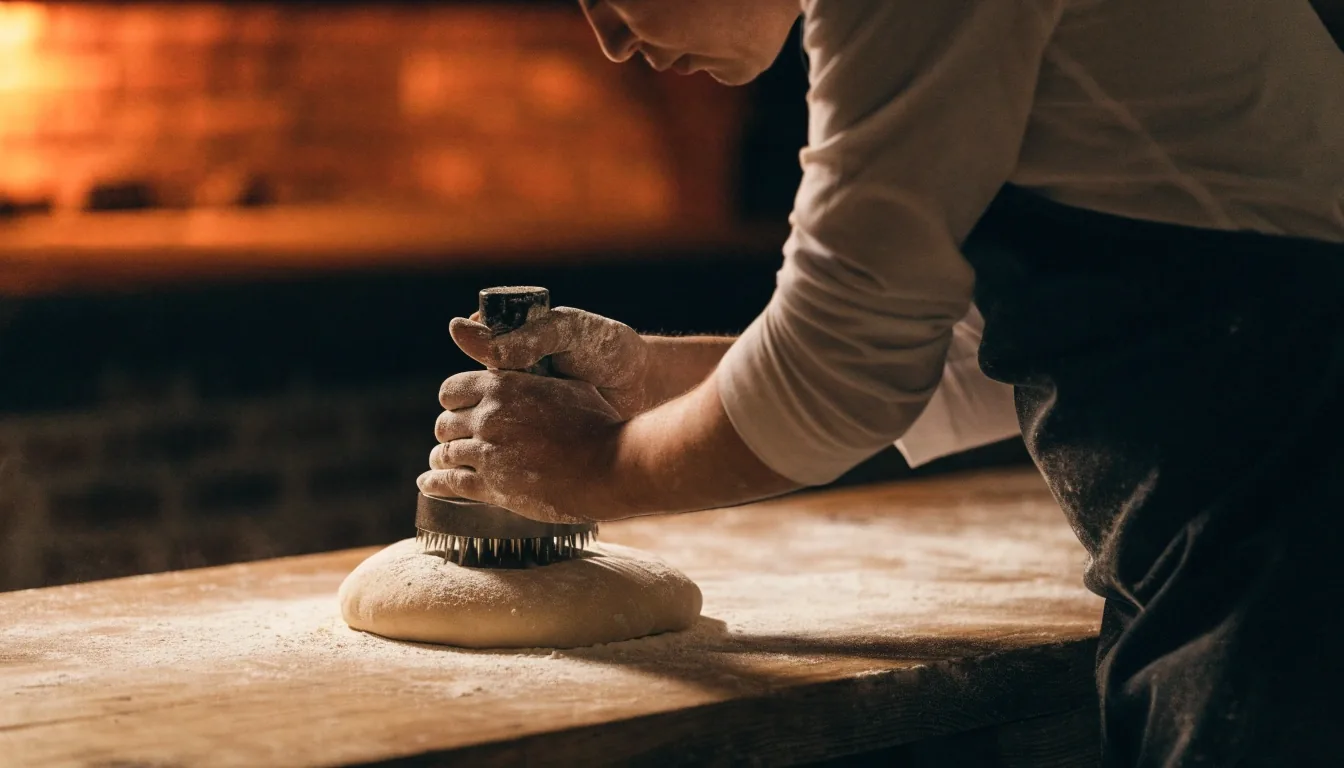
Handmade Dough and a 400-Degree Fire Oven
Fast-fired describes how Fireaway pizza is made: dough mixed and shaped by hand in the shop, then baked short and hot so the edge puffs and the base holds on the way home.
Fast firing is a method, not a slogan.
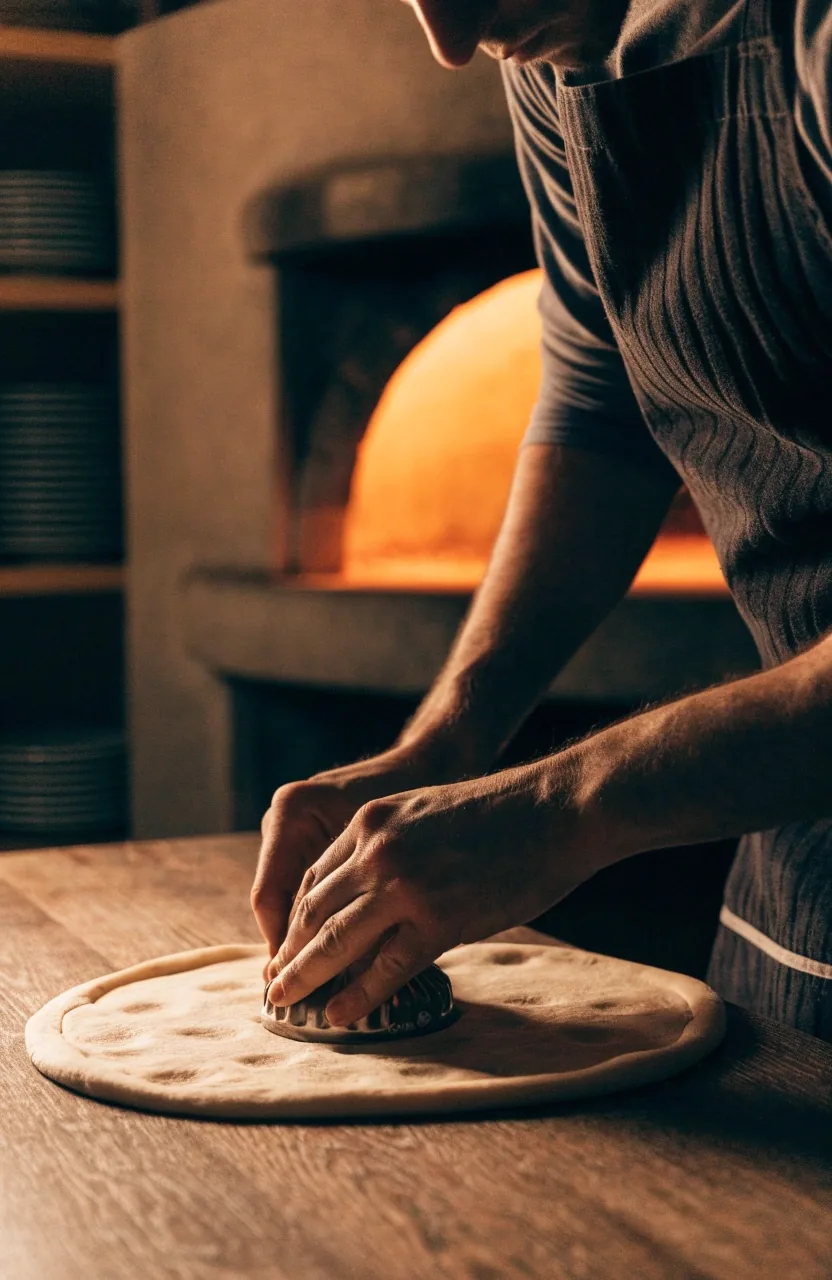
It means dough made by hand in the shop, then baked in a fire oven at around 400 degrees for a short time. That combination gives the crust its puffed edge and gives the base enough structure to survive a delivery trip across Croydon.
This page follows that path from flour to box: how the dough is mixed, what the heat does, where the limits are, and how to judge it with a plain Margherita. If you order Fireaway pizza for delivery or collection, this is what sits underneath the toppings.
Made at 142 High Street, Croydon, CR0 1ND. Open Mon–Sun 11:00–23:00.
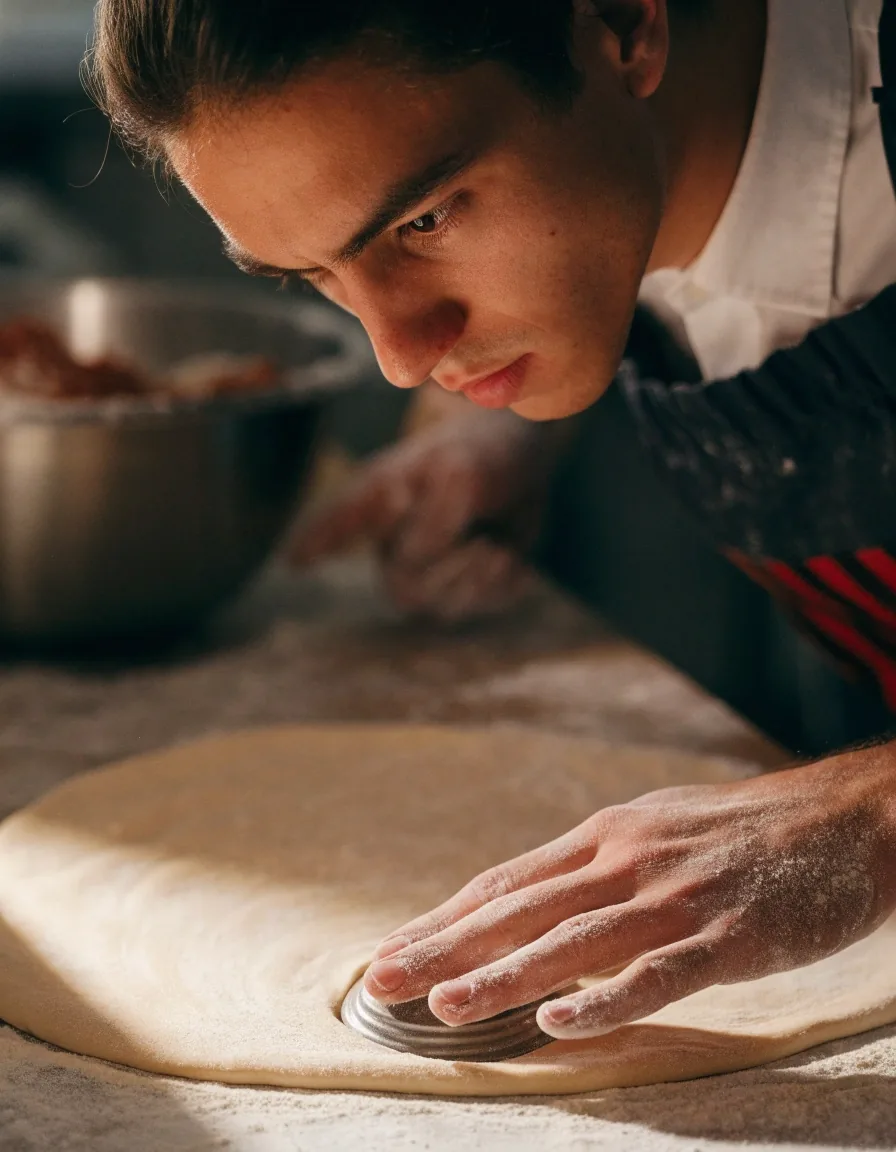
Morning prep: dough mixed and shaped in the shop, not delivered pre-formed.
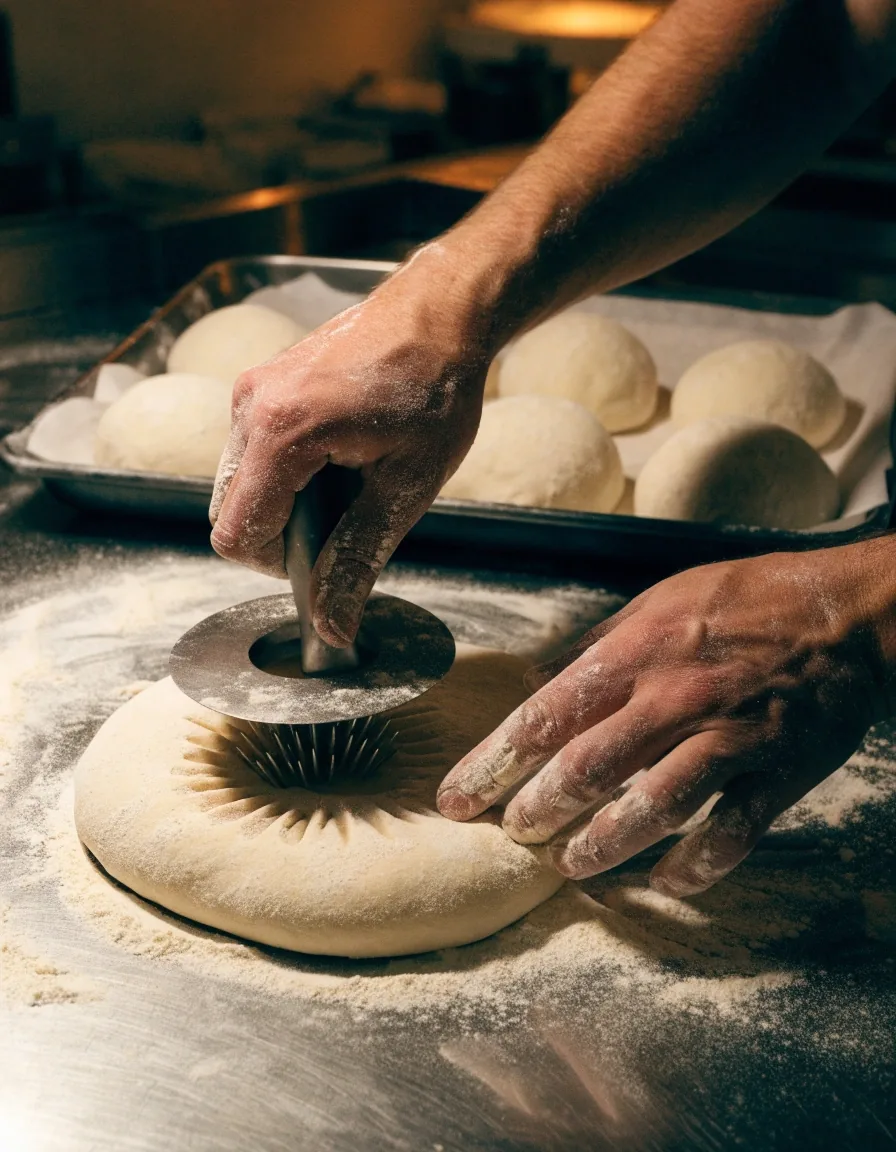
Making the dough by hand
The dough is mixed and shaped in the Croydon shop. Working it by hand gives the kitchen control over hydration and thickness, which matters because a base that is too wet will not bake through at high heat. A slack, over-hydrated ball spreads, sticks, and steams instead of setting.
Hand work also lets the dough respond to the day. Humidity in a Croydon kitchen in July is not the same as in January, and flour drinks water differently as the room changes. Small adjustments to water, rest time, and ball size keep the bake consistent without changing the recipe on paper.
Hydration kept in range
Enough water for an open, airy edge, not so much that the middle turns damp under cheese.
Thickness by feel
Pressed to an even sheet so the base cooks through in the same short window as the rim puffs.
Heat does the work
At around 400 degrees the base sets before it can go soggy.
A slower bake dries the dough and leaves it to collapse under toppings. The hot, short bake is why a fireaway pizza still holds its shape when the box opens.
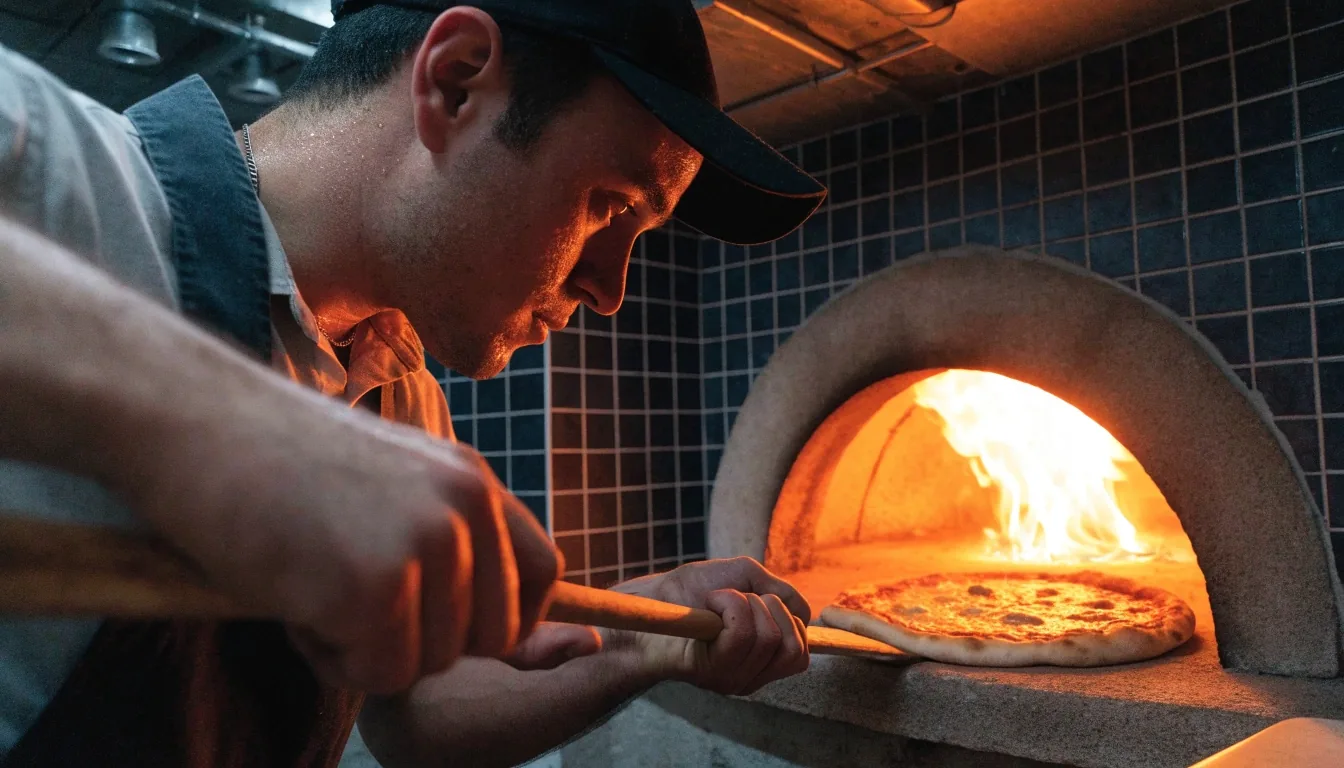
Why the oven runs at 400 degrees
Heat is the whole point of fast firing. At around 400 degrees the base sets in a short window, so the crust puffs at the edge while the middle stays firm rather than going soft. The toppings heat through without sitting long enough to release all their water into the dough.
Bake cooler and longer and two things go wrong: the dough dries out instead of puffing, and the cheese and vegetables stew. The base that results bends and folds under its own weight. The hot bake avoids both by finishing the pizza before moisture can soak in.
What the heat window changes
-
Edge lifts quickly as steam forms inside the rim, giving the puffed border.
-
Underside firms into a slice you can lift in one piece, box to plate.
-
Cheese melts and spots without oiling out, vegetables soften without flooding.
What the bake does to texture
Three things happen at once in a hot oven. Get the timing right and the slice keeps its shape from the oven to the front door.
Edge
The rim puffs
Moisture inside the dough turns to steam and pushes the border up. That is where the air pockets come from, and why the crust tears open soft instead of cracking dry.
Base
The underside firms
Direct heat from the deck sets the bottom into something you can hold. A firm underside is what keeps a delivered slice flat in the box instead of folding at the tip.
Topping
Toppings cook, not stew
Wet vegetables need care in a fast bake, and cured meats go on later so they warm without drying. Short heat keeps mushrooms, peppers, and tomatoes bright rather than watery.
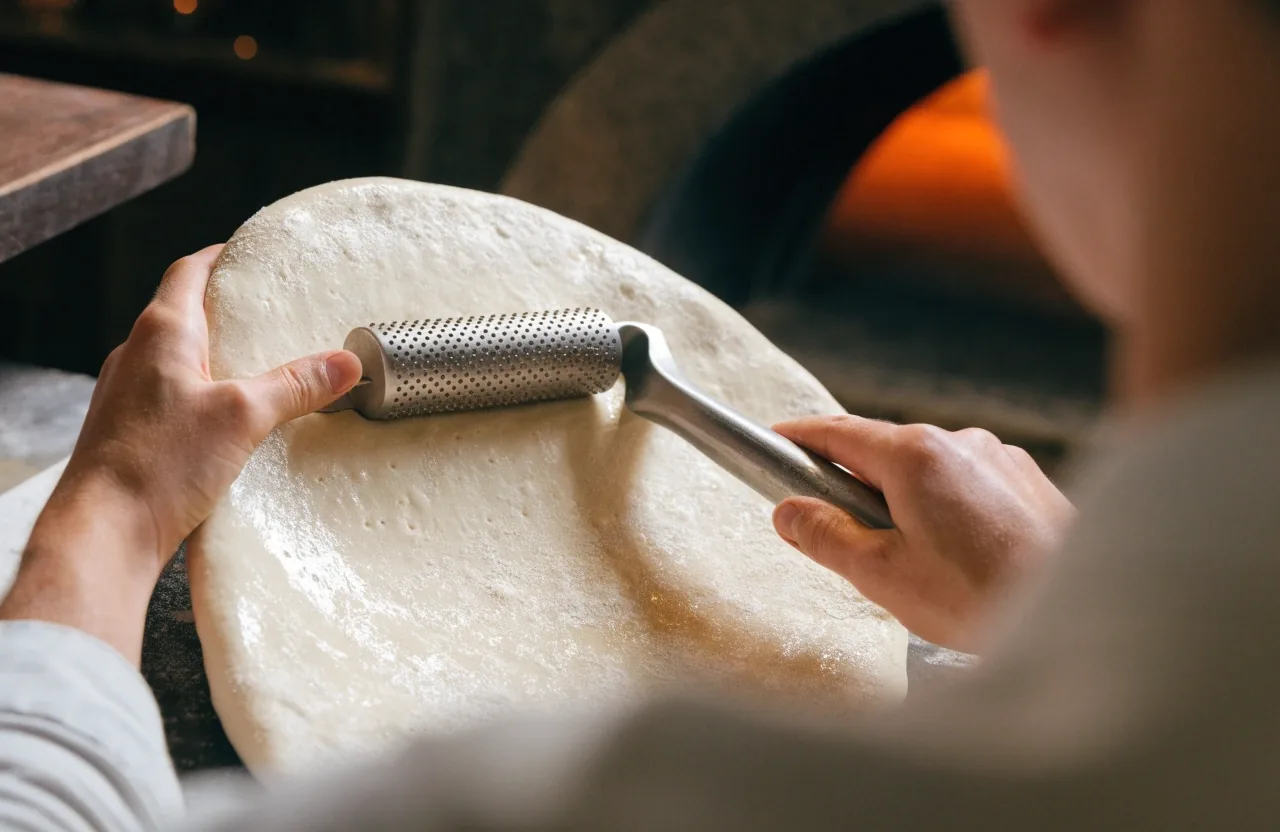
Neapolitan style, delivery, and the trade-off
Neapolitan-style pizza is built for eating at once, often with a soft centre that is wonderful at a table and less helpful in a box. Ten minutes in traffic with steam trapped under a lid asks something different from the base.
Fast firing is the middle ground. You keep the high-heat character of a proper bake while gaining enough structure to make the trip to your street without turning to mush.
See which bases travel bestConsistency across a shift
One good pizza is easy. Doing it at 7pm on a Saturday, forty times in a row, is the actual job. The kitchen works to set bake times and topping weights so a Margherita ordered at lunch tastes like the one ordered at close.
That is also why some custom requests get a straight answer rather than a yes. A topping that will not survive the oven, or that floods a fast bake, is not worth putting on. If you ask about a custom order, the team will tell you what holds and what to change.
Set bake times
Each size has a timed window in the fire oven, watched not guessed, so the base sets the same way each order.
Weighed toppings
Cheese and sauce are portioned so one pizza is not dry and the next soggy. Weight is what keeps fireaway pizza even.
Oven kept hot
The deck recovers between bakes during a rush, so the fortieth pizza still gets the same fierce base heat as the first.
Honest no
If an extra topping would ruin the bake, staff will suggest a swap that works in a 400-degree oven.
The Margherita test
If you want to know whether a kitchen's dough and bake are any good, order the Margherita. Tomato, mozzarella, basil, no hiding. It is the simplest way to taste what a shop's base is really like, and the most affordable first order.
Look for three things: a rim that is puffed but not hollow, a base that stays flat when you lift a slice, and cheese that has melted without pooling water. Once you know the base, the rest of the menu makes more sense, from spicy toppings to extra cheese.
Sourdough and the wider UK pizza scene
The UK runs from fast-fired shops through to sourdough specialists like Franco Manca, where slow fermentation and short ingredient lists set the tone. Both have their place. Sourdough leans into a tangier, slower-built flavour, while fast firing leans into speed and a base that holds together on the move.
Neither suits every occasion. A sit-down sourdough dinner and a Friday delivery to Croydon ask for different things. Delivery favours the bake that arrives flat, hot, and sliceable.
Questions about dough and fire
Short answers before you order, collect, or ask for something off-menu.
What does fast-fired mean?
It means the pizza is baked in a fire oven at around 400 degrees for a short time, which sets the base quickly and puffs the edge.
Is the dough made in the shop?
Yes. It is mixed and shaped by hand at the Croydon shop rather than arriving pre-formed, so hydration and thickness can be adjusted day to day.
How is this different from sourdough pizza?
Sourdough relies on slow fermentation for flavour. Fast firing relies on high heat for speed and a base that holds up in transit. They suit different occasions.
Why does the base matter so much for delivery?
A base that sets quickly in a hot oven keeps its shape in the box, so the pizza does not collapse or turn damp on the way to you.
Taste the base, then choose the rest
Start with a Margherita for delivery or collection from 142 High Street, Croydon. Call +44 20 8680 1234 if you want advice on a custom order before you buy.